Grana's Population Decline and Abandonment
The Eight Mountains: A NovelGrana’s Population Decline and Abandonment is a slow transformation of village, farm, and mountain landscape: once-inhabited buildings become ruins, cultivated slopes lose their upkeep, and the forest begins to return. The novel makes this retreat concrete through empty rooms and broken infrastructure, while showing that the loss is driven not only by time and weather but also by the difficulty of sustaining a livelihood in the mountains.
Evidence of a Shrinking Village
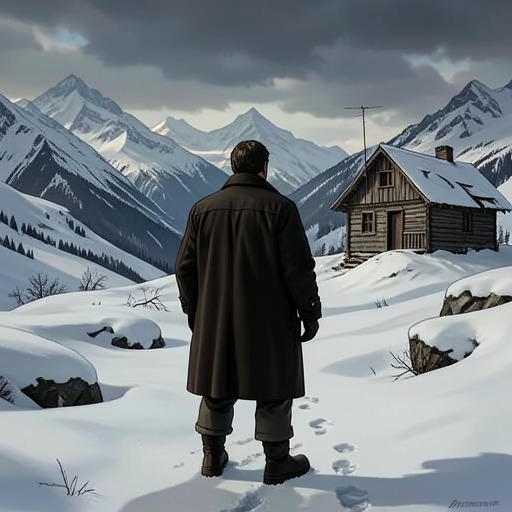
When Bruno and Pietro explore Grana, they find abandoned stables, haylofts, granaries, a shop with dust-covered empty shelves, and an old bread oven blackened by smoke. Some kitchens still contain a table, bench, plate, glasses, or frying pan, as if ordinary life had stopped without the household objects being cleared away. The narrator gives the scale of the change: in 1984 only fourteen people lived in Grana, although the village had once held as many as one hundred.
The village school captures the same reversal. Its imposing building still has three white-plastered floors, an external staircase, and a courtyard, but the schoolroom has become a place for raising gray rabbits. Hay, animal feed, urine, and vinegar-scented wine have displaced the former classroom atmosphere. The crucifix remains on the wall, and desks are still pushed together beneath it; initials carved into their polished wood, including many Gs for Guglielmina, preserve traces of generations who attended the school. The building survives, but its communal purpose has nearly disappeared.
The Working Landscape and Its Abandonment
The mountain settlements above Grana are described as abandoned or partly abandoned, often in worse condition than the village itself. Their remaining features—a stable here, a working fountain there, a maintained chapel—stand amid evidence of former labor. Flattened ground, stone piles, irrigation and drainage ditches, and terraced riverbanks show how earlier inhabitants made fields and vegetable gardens on difficult slopes. Pietro’s father admires the people who came from the northern Alpine region in the Middle Ages and managed to cultivate land where others had not ventured, sustaining themselves through specialized techniques and endurance in cold and deprivation. The present-day contrast is stark: he doubts anyone could now survive those winters independently, as earlier generations had for centuries.
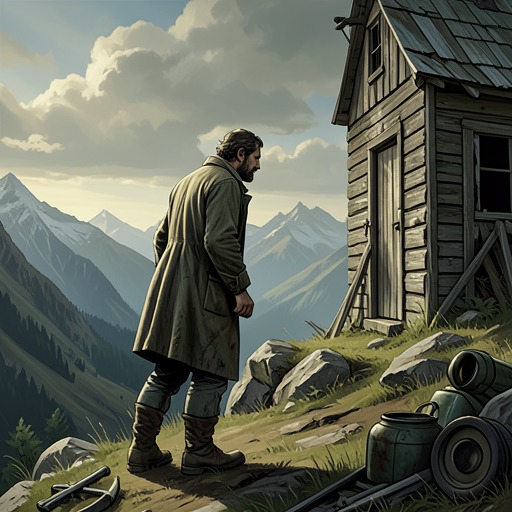
The neglect is also registered in the treatment of farm buildings and their surroundings. Outside one farmstead lie plastic buckets, half-rotted wood, a stove made from a diesel-oil drum, and a bathtub repurposed as a drinking trough. Such makeshift utility sits alongside a broader carelessness toward objects and places, as though their eventual abandonment were already assumed. The decay is not merely picturesque: it suggests how maintenance becomes difficult to justify when a settlement’s future seems to have been decided in advance.
Economic Pressure and the Return of the Forest
The economic weakness of small Alpine farming is stated directly by Luigi Guglielmina. He calculates cattle numbers, milk production, cheese yields, prices, and regulations, concluding that his work no longer makes financial sense and continues only through his passion for it. He predicts that within ten years of his death the land will revert to forest. The prediction gives the changing landscape a timescale: pasture, drainage ditch, dry-stone wall, path, and eventually house may all vanish beneath weeds, shrubs, and trees.
Later, the farmstead’s condition and the pastures’ vegetation make that forecast visible. A hut roof has caved in and pushed out the wall beneath its beams; the old bath rusts outside the stable, and the doors have been removed from their hinges. Larch saplings are springing up across the grazing land. The scene does not establish what has happened to Luigi Guglielmina, but it shows the kind of gradual reclamation he anticipated: the working farm’s structures fail while young trees occupy the land that grazing once kept open.
Ruins, Flood Damage, and Uneven Return
Other ruins near the lake reveal different layers of abandonment. One small building has a partly collapsed roof and a room left with a table, a crooked stool, scattered crockery, rubbish, and a stove that Pietro hopes to salvage before another collapse buries it. A much older Alpine farmstead, built at least three centuries earlier, consists of separate structures with external stone staircases and unusually large roof beams. Its interiors have disappeared, leaving rain-scoured walls. The contrast between these buildings suggests not one uniform process but successive forms of settlement and decline, each leaving a different material record.
The valley’s flood damage compounds the fragility of this landscape. When Pietro returns, the riverbed is at least twice as wide as he remembers, and meadows along its banks have been reduced to sand and stones. Farther up, a landslide has brought down trees and rocks, leaving unstable ground that still shifts beneath their feet four years later. Bruno crosses fallen trunks and mud without turning back; beyond the slide, he explains that a path once little used is now gone, and that he may be its only remaining user. The flood is distinct from the long retreat of farming, but its damage further isolates places already losing people and regular use.
Abandonment is not presented as inevitable in every individual case. During the months spent rebuilding Barma, Bruno treats that work as a trial of whether he can manage a mountain life, then plans to buy his uncle’s farmstead, rebuild its huts, acquire cattle, and establish a working farm. His plan offers a possible return to the labor that had sustained the older landscape, though it depends on borrowed money and a viable business. Later, Lara says that when the farm was clearly no longer viable, other possibilities remained: selling the cows, renting out the farmstead, and finding work elsewhere. Bruno could not accept an alternative life. Their disagreement shows that the decline of a mountain farm is both economic and personal: keeping the place alive may demand sacrifices that others are unwilling to make.